
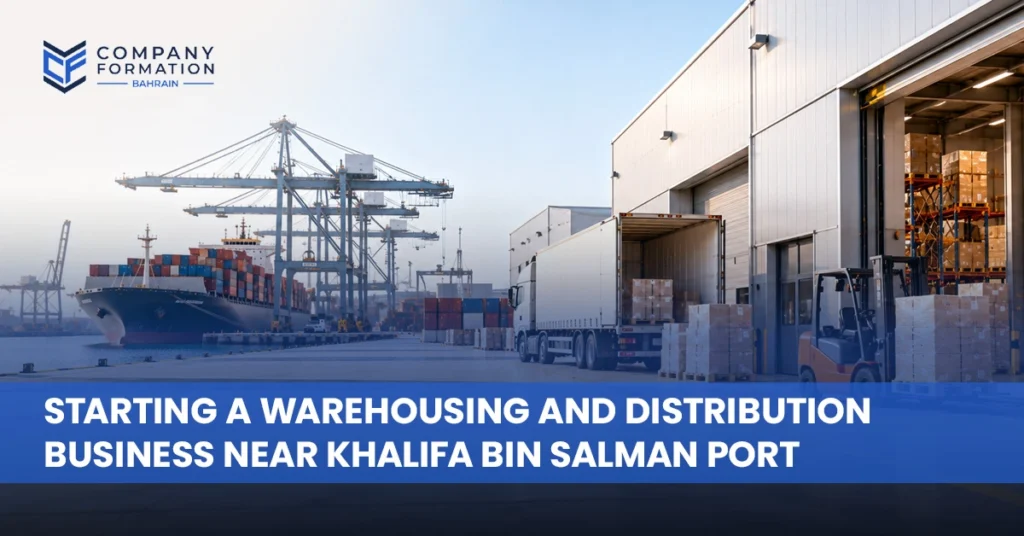
Bahrain has become an attractive destination for entrepreneurs and investors looking to enter the logistics and supply chain industry. Its strategic location in the Arabian Gulf, modern port infrastructure, and access to regional markets create opportunities for businesses involved in storage, transportation, and distribution.
For investors exploring logistics companies in Khalifa Bin Salman Port, establishing a warehouse or distribution facility can be a promising business opportunity. The port supports international trade and provides access to Bahrain’s domestic market and neighbouring GCC countries, particularly Saudi Arabia.
However, launching a logistics company requires careful planning, appropriate business registration, suitable warehouse facilities, and an understanding of the competitive landscape.
This guide by Company Formation Bahrain explains how to start a warehousing and distribution business near Khalifa Bin Salman Port, identify market opportunities, understand licensing requirements, and develop a profitable logistics operation.
Why Start a Logistics Business Near Khalifa Bin Salman Port?
Khalifa Bin Salman Port is Bahrain’s primary commercial port and an important gateway for international cargo. Its location near Bahrain International Airport and the King Fahd Causeway makes it particularly valuable for businesses involved in regional transportation and distribution.
Entrepreneurs researching logistics companies in Khalifa Bin Salman Port should consider the advantages of establishing operations near this major trade gateway.
Strategic Location and Market Access
Bahrain’s geographical position allows businesses to serve customers across the GCC while maintaining access to international shipping routes.
A warehouse near the port can receive imported cargo, store inventory, and distribute products to retailers, wholesalers, manufacturers, and commercial customers.
The nearby Bahrain Logistics Zone also provides opportunities for businesses involved in import, export, re-export, and value-added logistics activities.
Growing Demand for Warehousing Services
Businesses increasingly require reliable storage and inventory management solutions to maintain efficient supply chains.
Potential customers for a warehousing business in Bahrain include:
- Importers and exporters managing international shipments.
- E-commerce companies requiring order fulfilment.
- Retailers storing products before distribution.
- Manufacturers requiring raw material storage.
- Food businesses requiring temperature-controlled facilities.
- Companies seeking regional distribution services.
These customer segments create opportunities for entrepreneurs to develop specialized logistics services rather than relying exclusively on traditional warehouse rental.
Opportunities for New Investors
The logistics sector offers several potential business models, including third-party logistics (3PL), freight forwarding, inventory management, transportation, and fulfilment services.
Investors can select a model based on their available capital, operational experience, and target customers.
A specialized distribution business in Bahrain may focus on particular industries, such as retail, food products, electronics, or e-commerce, allowing the company to differentiate itself from larger logistics providers.
Primary Logistics Companies in Khalifa Bin Salman Port
Understanding the existing market is essential before establishing a new logistics business.
Several established companies operate in Bahrain’s logistics sector, providing services such as port operations, freight forwarding, warehousing, transportation, and supply chain management.
Entrepreneurs researching logistics companies in Khalifa Bin Salman Port should understand the roles of these industry participants.
1. APM Terminals Bahrain
APM Terminals Bahrain operates Khalifa Bin Salman Port and provides container handling, cargo operations, marine services, and port-related logistics infrastructure.
Its operations support international shipping and create opportunities for businesses offering complementary logistics services.
2. DHL
DHL provides international freight forwarding, transportation, and supply chain management services.
Its global network makes it a significant participant in Bahrain’s logistics market and a potential partner for businesses requiring international transportation.
3. Agility Logistics
Agility is associated with integrated logistics services, including warehousing, distribution, freight forwarding, and transportation.
Its presence highlights the demand for comprehensive supply chain solutions in Bahrain.
4. DSV
DSV provides international freight forwarding and logistics services, connecting sea, air, and land transportation networks.
Businesses handling international shipments may benefit from working with established logistics providers.
5. Aramex
Aramex provides transportation, express delivery, and supply chain services.
Its operations demonstrate the importance of reliable distribution networks for businesses serving Bahrain and regional markets.
These companies represent different segments of the logistics industry. New investors should identify a specific market opportunity instead of competing directly with established providers across every service category.
For example, a new company could specialize in small-business fulfilment, temperature-controlled storage, or inventory management for a particular industry.
Choosing the Right Warehouse Location
Selecting an appropriate warehouse location is one of the most important decisions when establishing a logistics business.
The Bahrain Logistics Zone is a prominent option for businesses involved in import, export, re-export, and value-added logistics activities.
However, investors should evaluate multiple locations based on operational requirements and long-term business objectives.
Important Factors to Consider
Proximity to the port: A warehouse close to Khalifa Bin Salman Port can reduce transportation time and costs for imported cargo.
Road connectivity: Convenient access to major roads is essential for trucks, delivery vehicles, and regional transportation.
Warehouse specifications: Consider storage capacity, ceiling height, loading docks, ventilation, fire safety, and available utilities.
Expansion opportunities: Select a location that can accommodate future business growth without requiring an immediate relocation.
Rental costs: Compare warehouse rental expenses against expected revenue, operational costs, and storage capacity.
Entrepreneurs planning Khalifa Bin Salman Port warehousing operations should also verify that their selected premises are approved for the intended commercial activity.
Business Registration and Licensing Requirements
Establishing a warehouse in Bahrain requires appropriate commercial registration and relevant activity-specific approvals.
The business setup process depends on the selected activity, legal structure, ownership arrangements, and warehouse location.
Step 1: Select the Business Activity
The business activity should accurately reflect the services the company intends to provide.
Possible activities include:
- Warehousing and storage.
- Distribution and logistics services.
- Freight forwarding.
- Transportation.
- Inventory management.
- Packaging and fulfilment.
Investors should verify the applicable activity classifications and licensing conditions before submitting an application.
Step 2: Choose the Legal Structure
The appropriate legal structure depends on ownership, investment requirements, and the intended business model.
Investors may consider establishing a company with limited liability or another permitted legal form.
Foreign investors should confirm the ownership conditions applicable to their selected activity.
Step 3: Obtain Commercial Registration
The company must obtain a Commercial Registration (CR) through Bahrain’s relevant registration procedures.
A CR alone may not authorize the company to begin operating a warehouse. Investors must obtain the required business licence and operational approvals before commencing regulated activities.
Step 4: Secure Warehouse and Operational Approvals
Warehouse operations may require municipal, environmental, fire safety, and other activity-specific approvals.
The exact requirements depend on the materials being stored, the warehouse location, and the nature of the operation.
Businesses handling hazardous materials, customs-controlled goods, or specialized cargo may require additional permissions.
Company Formation Bahrain can help investors understand the applicable registration procedures and identify the approvals relevant to their proposed business.
Setting Up Efficient Warehouse Operations
Once the registration and licensing process is underway, entrepreneurs should focus on establishing an efficient warehouse operation.
A well-managed facility should support accurate inventory tracking, safe storage, and timely order fulfilment.
Warehouse Management Systems
A warehouse management system (WMS) helps businesses monitor inventory, track incoming shipments, manage orders, and reduce operational errors.
A suitable system should provide:
- Real-time inventory visibility.
- Barcode or QR-code scanning.
- Stock movement tracking.
- Order processing.
- Reporting and inventory reconciliation.
Digital inventory management can improve operational efficiency and help businesses maintain reliable customer service.
Equipment and Infrastructure
The equipment required depends on the warehouse’s size and the type of goods handled.
Common equipment includes forklifts, pallet racks, loading equipment, storage containers, safety systems, and delivery vehicles.
Temperature-controlled storage may also be necessary for food products, pharmaceuticals, and other sensitive materials.
Investors developing Khalifa Bin Salman Port warehousing facilities should consider equipment requirements before committing to a warehouse lease.
Staffing Requirements
Warehouse operations typically require trained personnel responsible for inventory management, receiving, dispatching, equipment operation, and customer coordination.
Businesses should establish clear procedures for workplace safety, stock handling, and operational accountability.
Developing a Profitable Distribution Business Model
A successful logistics company should have a clearly defined revenue model.
Rather than relying exclusively on warehouse rental income, entrepreneurs can offer several complementary services.
Storage Fees
Customers pay for storing goods within the facility.
Pricing may be based on pallet positions, square footage, storage duration, or inventory volume.
Handling Charges
Businesses can charge for receiving, unloading, inspecting, sorting, and dispatching goods.
These services can generate additional revenue beyond basic storage.
Distribution and Delivery
A company can provide local transportation and delivery services to retailers, wholesalers, and commercial customers.
For regional distribution, partnerships with established transportation providers may help control costs.
Value-Added Services
Additional services can include:
- Packaging and repackaging.
- Labelling.
- Order fulfilment.
- Inventory reporting.
- Product inspection.
- Returns management.
Entrepreneurs developing a distribution business in Bahrain can combine these services to create diversified revenue streams and improve customer retention.
Estimated Investment and Business Planning
The initial investment required to establish a warehouse depends on its size, location, equipment, staffing, and operational model.
A small storage facility may require a significantly different investment from a large distribution centre equipped with automated systems and temperature-controlled storage.
Before launching, investors should prepare a detailed business plan covering:
- Warehouse rental or property acquisition.
- Commercial registration and licensing.
- Equipment and warehouse infrastructure.
- Employee salaries.
- Insurance and maintenance.
- Technology and inventory systems.
- Transportation expenses.
- Marketing and customer acquisition.
- Working capital.
Businesses should also estimate monthly operating expenses and calculate the minimum storage occupancy required to achieve profitability.
A realistic financial plan helps investors evaluate the commercial viability of the project before committing substantial capital.
Marketing Your Warehousing and Distribution Business
Once the warehouse is operational, attracting reliable customers becomes a priority.
A strong marketing strategy should focus on businesses that regularly require storage, inventory management, and transportation services.
Build a Professional Online Presence
A professional website should explain the company’s services, warehouse capabilities, location, and customer benefits.
Search engine optimization can help attract customers searching for logistics providers in Bahrain.
Relevant search terms may include warehouse rental, freight forwarding, inventory management, and logistics services near the port.
Develop Business Partnerships
Partnerships with freight forwarders, importers, exporters, manufacturers, and customs brokers can generate recurring business.
Entrepreneurs should also consider attending logistics exhibitions, trade events, and industry networking opportunities.
Focus on Customer Retention
Reliable service is essential in the logistics sector.
Accurate inventory records, timely deliveries, transparent pricing, and responsive customer support can help build long-term relationships.
A business that consistently meets customer expectations is more likely to secure repeat contracts and referrals.
Conclusion:
Starting a warehousing and distribution business near Khalifa Bin Salman Port offers investors an opportunity to participate in Bahrain’s logistics and supply chain sector.
The country’s strategic location, established port infrastructure, and access to regional markets create opportunities for businesses offering storage, fulfilment, and distribution services.
However, success depends on selecting the right business activity, securing suitable premises, obtaining the required approvals, and developing an efficient operational model.
For entrepreneurs exploring logistics companies in Khalifa Bin Salman Port, a well-planned business strategy can help identify the right market segment and build a sustainable logistics operation.
Company Formation Bahrain provides professional guidance to entrepreneurs and investors looking to establish a company in Bahrain.
Ready to Start Your Logistics Business in Bahrain?
Start your warehousing and distribution business with expert support from Company Formation Bahrain.
We help you navigate company registration, business activity selection, and licensing requirements.
Contact Company Formation Bahrain today to get started!
Location
Road 2832, Seef District, Manama, Bahrain
Email
info@companyformationbh.com
Phone
+973 3383 2422
Frequently Asked Questions
Is Bahrain a good location for starting a warehousing business?
Yes. Bahrain offers strategic access to regional markets, established port infrastructure, and logistics facilities designed to support import, export, and distribution activities. The country’s proximity to Saudi Arabia can also benefit businesses serving GCC customers.
What is the best location for a warehouse near Khalifa Bin Salman Port?
The Bahrain Logistics Zone is a prominent option because of its proximity to the port and its focus on logistics and value-added activities. Other industrial locations may also be suitable depending on warehouse requirements, transportation access, and budget.
What licences are required to establish a warehouse in Bahrain?
Requirements depend on the selected business activity, warehouse location, and goods being stored. Businesses generally need commercial registration and relevant activity approvals. Additional municipal, environmental, or customs-related permissions may apply.
Can foreign investors establish a warehousing and distribution company in Bahrain?
Foreign investors may be able to establish a company with permitted foreign ownership, depending on the selected activity and legal structure. Ownership conditions and licensing requirements should be verified through the relevant authorities before establishing the business.
How can you get help establishing a logistics business?
You can get guidance on commercial registration, business activity selection, company formation procedures, and applicable licensing requirements. Professional assistance can help investors understand the establishment process and prepare for launching their warehousing and distribution operations.